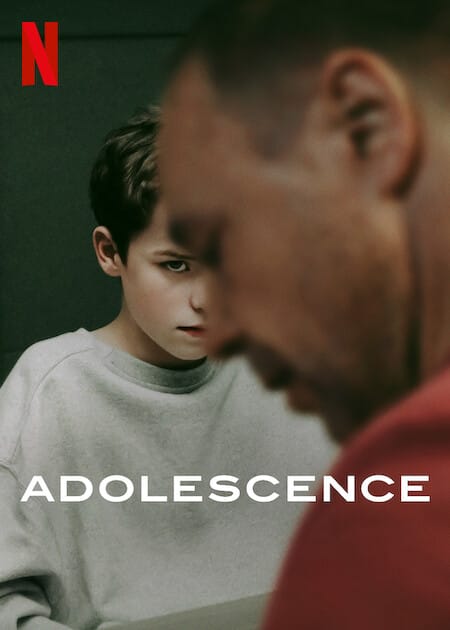
Over the past few weeks, I’ve found myself repeatedly encouraged – some might say gently nagged – to share my thoughts on Netflix’s recent drama ‘Adolescence’. But for reasons I couldn’t quite put my finger on, I’ve resisted. Even now, as I begin writing, I’m unsure where this will lead… Still, sometimes the best way to understand resistance is simply to write through it!
So, what’s been holding me back?
Partly, it’s the sense that so much has already been said. The acting, writing, and cinematography have been widely (and rightly) praised. Beyond that, however, reactions have split into two fairly distinct camps.
‘Adolescence’ and the growing divide
The first, and seemingly larger, applauds ‘Adolescence’ for shining a necessary light on the need to better protect young people from harmful online content. In the show, Jamie’s descent is clearly influenced by access to social media, pornography and unmoderated sexual content. These elements have strengthened calls for regulatory bodies like Ofcom to act decisively, for the porn industry to implement some form of robust age verification, and for schools to play a larger role by expanding education around online risks.
To its credit, the drama doesn’t simplify Jamie’s situation. It portrays, with care, the nuanced and tragic complexity of the story. And yet, some responses have zeroed in on blame: at parents, teachers, cultural influences (the Andrew Tates of the world, quite rightly), whose rhetoric can quietly shape how young men see themselves and others.
The second, smaller camp has been more critical. They argue that ‘Adolescence’ contributes to an emerging moral panic about digital spaces, overstates its influence, and underrepresents the broader context. Some in this group question whether there’s sufficient evidence linking social media or pornography to the kinds of behaviours portrayed. They caution against drawing sweeping conclusions from individual cases and challenge what they see as an erosion of nuanced debate.
At times, it feels like both sides are talking past each other.
For me, this divide is at the heart of my hesitation. It’s not just a fear of adding noise to an already crowded conversation, it’s the risk of being dismissed altogether. Is my perspective valid if it isn’t “scientific” enough? Am I stepping out of my lane if I speak from what I see and hear in my clinical work? This tension became even more tangible when The Guardian was recently criticised for reporting on links between porn use and sexual offending, citing frontline professionals and real testimonies, rather than peer-reviewed studies. Some dismissed the article as fearmongering and spreading misinformation, ironically without sharing scientific citations.
Who gets to speak and who gets heard?
It left me wondering, whose voices are we willing to hear? Do we privilege only those with academic credentials? And if so, what do we lose by dismissing lived experience?
This tension isn’t limited to scripted drama. Take the recent OnlyFans controversies, for example. On Newsnight, a 23-year-old content creator shared her story, recounting how exposure to porn at age 11 had influenced her eventual career choice. She spoke with confidence about enjoying her work, even as her social media showed her breaking down after certain scenes. Another creator made headlines for marketing herself to “barely legal” 18-year-olds, claiming to offer a kind of sexual education that could redirect them away from more violent material. Her work, she said, was both empowering and financially rewarding, reportedly earning £600k per month.
Reactions to these stories echoed the response to ‘Adolescence’ – a mix of concern, compassion, celebration, and calls for regulation. Some praised the creators for contributing to gender equality in porn, others expressed deep discomfort. Both positions are valid, but perhaps the bigger issue is our struggle to hold them in the same conversation.
And again, I’m left wondering, what does it mean to “stay in your lane”? Does my work supporting those struggling with problematic porn use give me the right to speak about these broader societal questions? Or am I only allowed to reflect what’s been peer-reviewed?
Here’s where I land. If my insights don’t serve my clients – either directly or by informing those who support them – then I have no business sharing them. But if they do, then I believe they matter.
So, here’s what I’ve seen…
At the Laurel Centre, the majority of our clients first encountered porn at a young age. Many also experienced online abuse and a concerning number had their first sexual experience with a sex worker. Some have disclosed moments where they weren’t sure if they’d crossed a line of consent and around 10% are currently under investigation for sexual offences. Our recent pilot study of the Pivotal Recovery course revealed that 30% of participants were at risk of breaking the law as a result of their behaviours.
And yet, when professionals raise concerns about the impact of porn, they’re often met with accusations of moral panic or prudishness. In almost every other area of mental health, we’re encouraged to be cautious with vulnerable populations, to question excess, to be thoughtful. But when it comes to porn, those same instincts are often framed as repressive or regressive. It’s as though in our valiant efforts to be more sex-positive and inclusive, we’ve fallen into danger of being blind to risk.
Final thoughts
I’m not advocating censorship, nor am I placing blame. But I am calling for a deeper appreciation of the complexity here. ‘Adolescence’ didn’t offer any easy answers and perhaps that’s what makes it so powerful. Jamie’s character forces us to reckon with the truth that people can be both perpetrators and victims. Compassion for one doesn’t negate justice for another.
This isn’t a call to panic. It’s a call to humility. To curiosity. To hearing all voices – academic, clinical, and experiential. Because real change happens when we listen not only to the data, but to the people living the stories behind it.
So, let’s keep talking and let’s make space for the science and for the stories. Let’s value both research and the rich, often messy, testimony of lived experience.
And let’s remember, not having all the answers isn’t a weakness. It’s where the most meaningful conversations begin.